Presenter: Meg Mott
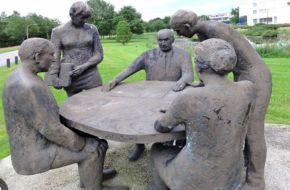
Deliberation is the practice that holds our democracy together, but does it always lead to better decisions? When citizens only talk to like-minded citizens, the thinking gets stuck and the decisions tend to be more extreme. This presentation gives participants a chance to find new ways to think about a contentious issue using the basic principles of the Constitution: freedom of speech and due process. Instead of carving out one’s (predictable) position in the culture wars, we’ll look at the best arguments on a contentious issue from the view point of progressives, conservatives, and libertarians. By the end of the discussion, participants will have a greater understanding of how the Constitution can help us to foster political friendships.


Presenter: Mary C. Kelly
Marking the 250th anniversary of the Declaration of Independence allows us to reflect on the imprint of historical actors and events in our lives today. Why do we look to the past to inform our sense of ourselves, our communities, and our identities? How does commemoration of historical events exert meaning in our lives? Explore themes of faith, freedom, and revolutionary change through St. Patrick's life and legacy. Travel historical pathways from Ancient Ireland to today's exuberant annual holiday – when "everyone is Irish" for a day. Experience 5th century Latin, Roman, and Irish images and texts that reveal Early Christian Irish worlds of slavery and mysticism, Patrick's transformational revolution in faith, his journey to sainthood and then to national symbol, and the colorful legacy he is associated with today. If you have Irish roots, or just enjoy the festivities on March 17, this presentation will transport you from Ancient Irish foundations to modern American remembrance forms, and illuminate why St. Patrick's name has endured for more than a millennium and a half.
Presenter: David Alcox
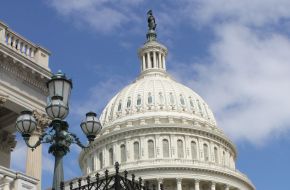
Learn about the text of the Declaration of Independence, who the key players were, the Enlightenment influence and if the values espoused in the Declaration are still relevant today. Participants will experience an unbiased look at the Declaration and receive valuable content to understand the influences and ideals of the document. They will be able to critically think about the document and have the knowledge of what it actually says. They will be able to form opinions and speak with conviction about what they learned.
Presenter: Glenn Knoblock
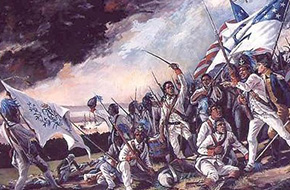
One of the most interesting aspects of the American Revolution is the role played by African Americans in the fight for independence. Both free African Americans and those that were enslaved were key in manning state militias and Continental Army units, as well as serving on the high seas in the Navy and on privately armed ships. Indeed, their service to the colonies was crucial in a conflict that lasted nearly seven years. Prohibited from serving in military units and largely considered "undesirable elements," how is it that these African-American soldiers came to fight for the cause of liberty, even when their own personal liberty was not guaranteed?
Glenn Knoblock examines the history of African-American soldiers' service during the war, including how and why they enlisted, their interaction with white soldiers, service on the battlefields, how they were perceived by the enemy and the officers under whom they served, and their treatment after the war.

Presenter: Mary Adams
New Hampshire often gets overlooked in the narrative of the American Revolution, overshadowed by its noisy neighbor to the south. Nowadays, few people know about Paul Revere’s first ride, which was to Portsmouth in December 1774 to warn the patriots that the British were coming to reinforce Fort William and Mary, five months before the Redcoats marched on Concord and Lexington. Nor do they know that two-thirds of the troops at the Battle of Bunker Hill were from New Hampshire. Most people are also unaware that New Hampshire’s Provincial Congress adopted the first state constitution in January 1776, making no mention of royal authority and essentially declaring independence from Great Britain six months before anyone else. And this is just the beginning of New Hampshire’s revolutionary story. This program is presented as part of the New Hampshire Historical Society's celebration of America's 250th.
"Mary was well prepared and is a wonderful educator and speaker. She knows her subject well and her enthusiasm was evident. The slides and stories she chose were perfect for the subject and we could tell she knows a lot more than she could cram into the presentation. Mary is a valuable resource for learning NH history."
- Previous HTG host
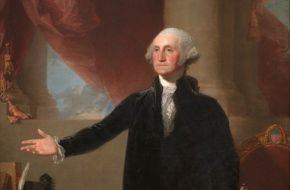
Presenter: Inez McDermott
This program explores American portraits painted and sculpted during the years leading up to, and the decades after, the Revolution. The ideals, values and virtues expressly stated in our founding documents are easily identifiable in these portraits once we know how to “read” them. We will examine portraits of founding “fathers” and “mothers,” as well as of lesser-known individuals, as documents that can be read like texts. We will also discuss the tradition of portraiture, and the influences of earlier art movements, artists, and artifacts, that inform these American portraits. Audiences will be introduced to, and practice, some skills of art analysis and learn how art works can reveal so much about a culture.
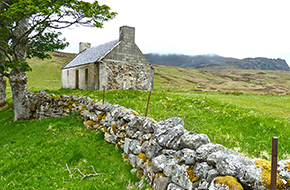
Presenter: Mary C. Kelly
Just as the Declaration of Independence inaugurated a new American nation, Ireland’s Great Famine of 1845-1852 transformed American streetscapes with an extraordinary Irish influx. This illustrated presentation reveals human floodtides who escaped Ireland’s ravaged countryside on grim “coffin ships” and found refuge in teeming American tenements. From images of Ireland’s devastation and the unwelcome Catholic Irish presence in American harborsides, we examine the complexities of Famine remembrance and the place of the episode in the lives of Irish exiles in America. From there, we encounter powerful sources of ethnic Irish political and cultural advancement over 20th century decades, from John L. Sullivan to the Kennedys and beyond, as we track the Famine’s memory and meaning through subsequent generations.
As we contemplate almost two centuries of Irish American achievement in politics, education, labor, faith, and sports through the lens of Famine remembrance and commemoration, we may also reflect on American progress to independence and the upcoming 250th anniversary. This program invites you to experience Ireland’s Famine as a crucial episode for the Irish in America, and understand how its legacy continues to shape what it means to be Irish-American as the US marks its 250th anniversary.
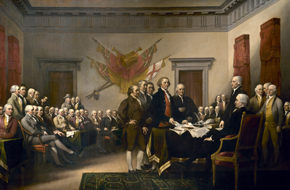
Presenter: Meg Mott
The Declaration of Independence acknowledges a most volatile right: the people's right to rebel. If the people are not happy with their government, then it is within their unalienable rights to "alter and abolish it." In 1776, that right was exercised through armed rebellion. But is that the only way to exercise that right?
In 1963, John Lewis envisioned a different sort of revolution, one that would achieve the ends of freedom and liberty through non-violent means. In this "unfinished revolution," he argued, current enemies are seen as future friends. We'll consider how the language of the Declaration guides social movements, across the political spectrum, to institute a government that seems most likely to protect each other's unalienable rights.

Presenter: Liz Tentarelli
Liz facilitates non-fiction book discussions relating to historical topics. If you are interested in reading books on historical non fiction topics, please reach out to Liz directly to confirm interest and availability.
Contact
Liz Tentarelli
Manchester, NH
LWV@kenliz.net
Available Program Formats: In person or online
Book Groups offer an opportunity for participants to engage with diverse perspectives in the humanities through literature to build understanding, empathy, and to support a culture of reading in the Granite State. New Hampshire Humanities provides expert facilitators; host organizations must provide the books.

Presenter: Mary C. Kelly
Mary facilitates discussions on popular history books. If you are interested in reading books on popular history (fiction or non fiction), please reach out to Mary directly to confirm interest and availabolity.
Available Program Formats: Illustrated online presentations with flexible scheduling options. April-October in-person presentations within a 20-mile radius of Keene, NH. Weekend scheduling available for all programs.
Book Groups offer an opportunity for participants to engage with diverse perspectives in the humanities through literature to build understanding, empathy, and to support a culture of reading in the Granite State. New Hampshire Humanities provides expert facilitators; host organizations must provide the books.

Presenter: Carrie Brown
Carrie facilitates discussions on books relating to the theme of “coming of age in America.” This includes classic literature. If you are interested in reading books on these topics, please contact Carrie directly to confirm interest and availability.
Contact
Carrie Brown
Enfield, NH 03748
csb@carrie-brown.com
Cell Phone: 603-359-3072
Available Program Formats: In person or online presentations. Virtual only December through March.
Book Groups offer an opportunity for participants to engage with diverse perspectives in the humanities through literature to build understanding, empathy, and to support a culture of reading in the Granite State. New Hampshire Humanities provides expert facilitators; host organizations must provide the books.
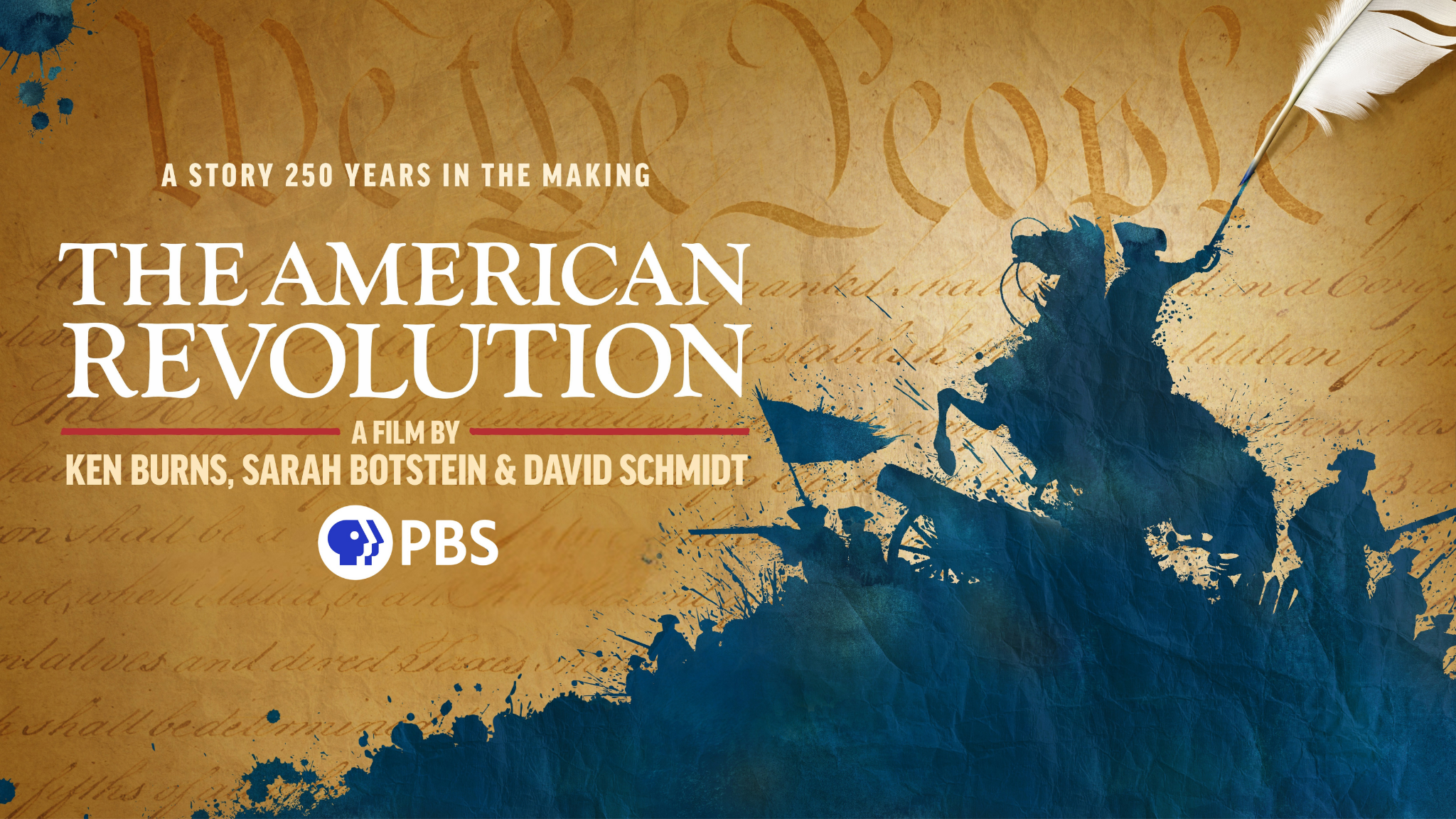
Presenter: Mohamed Defaa
Be a part of something BIG: Join US@250: Big Watch, a statewide series of community-driven programs that bring Granite Staters together to watch, discuss, and reflect on the 250th anniversary of the Declaration of Independence and American Revolution.
Join us to commemorate and reflect upon the 250th anniversary with a film screening and discussion. Together, we’ll watch a short (30 min) excerpt from THE AMERICAN REVOLUTION, a new film directed by Ken Burns, Sarah Botstein, and David Schmidt, followed by a community discussion. The featured segment from THE AMERICAN REVOLUTION,“The Spirit of Service,” explores service as a core American value, from the nation’s founding through to the present day – examining volunteerism, civic participation, public leadership, and more.
Expert facilitator Mohamed Defaa will guide thoughtful conversations about “remembering together,” considering questions such as:
-
- What moments from our past define who we are and point to a shared future?
- What are the key historical moments in your town’s or community’s history?
- How does focusing on these moments shape your sense of your community’s future?
This program will last approximately 1.5 hours (30 minutes for film screening, 1 hour for facilitated discussion). Please make sure you have appropriate technology for the film screening, including a strong internet connection, large screen, and sound system. Please contact programs@nhhumanities.org for the link to the themed excerpt.
Big Watch programs are made possible by a partnership between New Hampshire Humanities and New Hampshire PBS.
"It's like being a part of history."
-Big Watch participant
Back to Humanities to Go Details