Goffstown’s Big Watch: Community Conversation with Student Voices
See all news
What happens when a 250-year-old experiment becomes the center of a community conversation? In Goffstown, the New Hampshire Humanities US@250: Big Watch initiative, (locally organized by Caroline Kenney, Assistant Director & Head of Adult Services and Outreach for the Goffstown Public Library and the Goffstown Historical Society), offered a clear answer. What could have been a simple celebration instead became a place for civic reflection, bringing together 35 high school students and community members to explore the founding of the United States and what it means today.
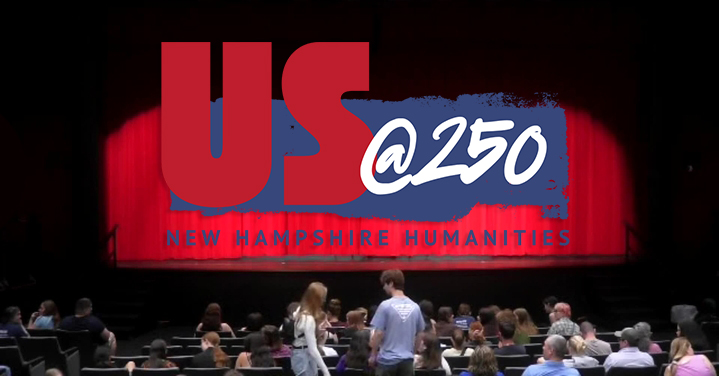 Eighteen members of Rho Kappa (Goffstown High School’s chapter of the National Social Studies Honor Society), joined longtime residents in a candid, intergenerational dialogue. According to Caroline Kenney, one of the main goals was to bring the community together in a special way, encouraging productive intergenerational conversations especially during the 250th anniversary of the country. The conversation was shared, students and community members engaging as peers. Many students reflected afterward that the experience pushed them outside their comfort zones while making them feel respected and heard. Several pointed out how meaningful it was to be treated as equals in conversations that are often led by older voices. Likewise many community members appreciated the younger generation being there and hearing their perspective.
The discussion itself was facilitated expertly by historian Beth Salerno and shaped by thoughtful questions, excerpts from Ken Burns’ film The American Revolution, and most importantly, a willingness to listen. Community members and students grounded their conversations in historical understanding, shaped by their education, personal experience, and the moments of historical change they had witnessed. Each group brought their own perspectives, touching on issues of rights, equality, and freedom.
What emerged was a conversation that moved naturally between past and present. Participants wrestled with familiar but still unsettled questions: What does “all are created equal” really mean? How has that idea changed over time? Where does it still fall short? At several points, the conversation turned local. References to New Hampshire’s role in the Revolution, including participation in the Battle of Bunker Hill (John Stark) and events like the Pine Tree Riot, reinforced how big ideas often take shape in small localities.
The structure made room for both agreement and disagreement, because the goal was never consensus. Instead participants had space to engage with others, ask questions, listen, and consider perspectives across generations. In that sense, the event reflected what the New Hampshire Humanities US@250 Big Watch series was designed to do: move beyond observation and into dialogue.
For students and community members the impact was carried beyond the evening. Many left with a clearer sense that civic life isn’t passive, it depends on participation. In Goffstown, The Big Watch didn’t just revisit the past; it underscored that interpreting and analyzing our past and shaping our future is a shared responsibility.
By Andrew Pyszka, Social Studies Teacher, Goffstown High School, in collaboration with Beth Salerno and Caroline Kenney